
clients are not king anymore
Consensus is killing creativity.

“The customer is always right” might genuinely be one of the most culturally destructive ideas modern business ever produced.
Not because customers are unintelligent. Not because audiences should be ignored. And definitely not because feedback is useless. The problem is more subtle than that. Somewhere over the last twenty years, businesses stopped treating audiences as people to understand and started treating them as creative directors.
You can feel the consequences everywhere.
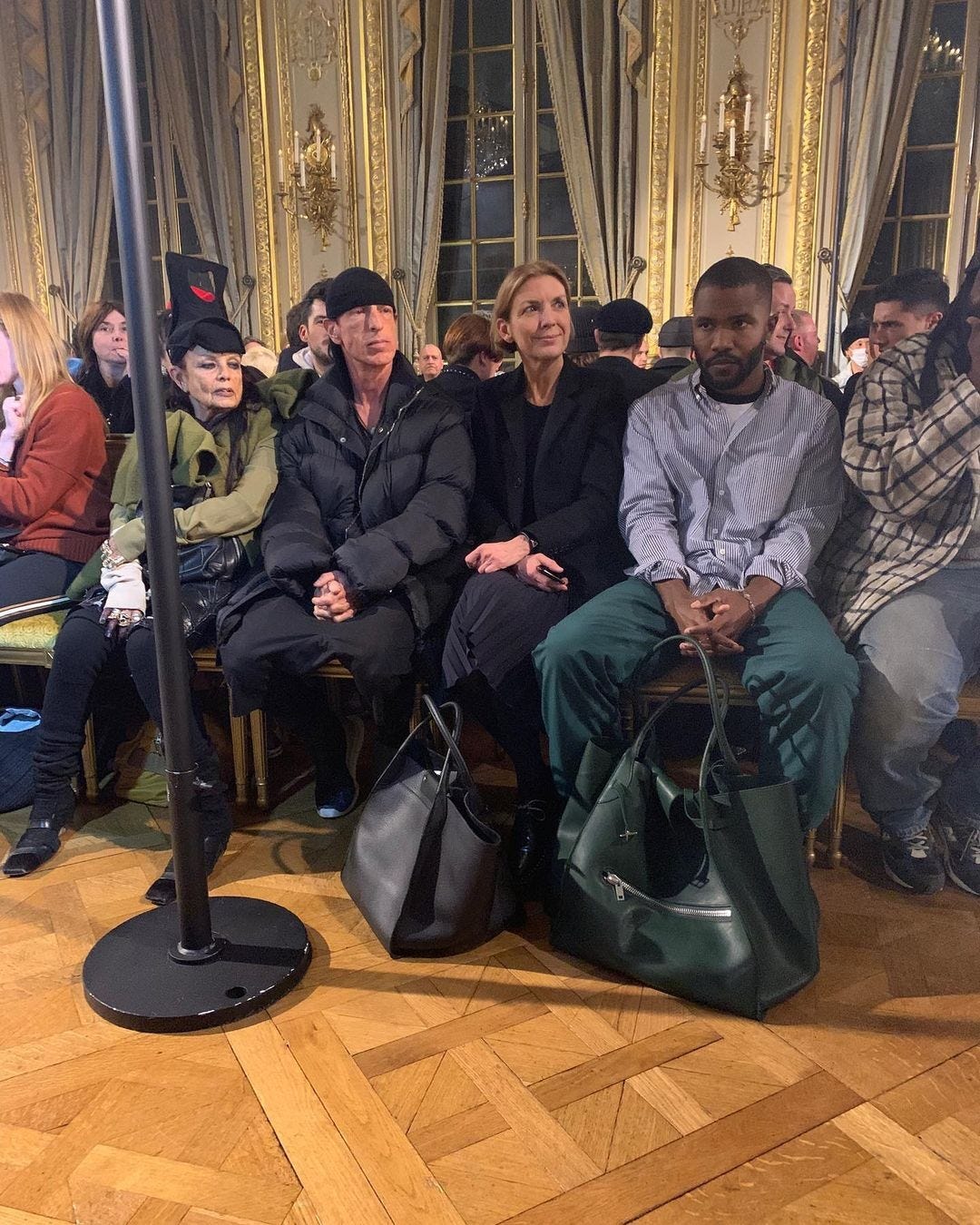
Films are over-explained before they even come out. Fashion brands panic the second something feels too niche. Music gets flattened into background noise optimized for “good vibes only” playlists. Restaurants redesign themselves around Instagram visibility. Streaming platforms produce content that feels mathematically engineered to be watched while folding laundry. Even creative work that’s supposed to feel disruptive now feels carefully calibrated not to trigger backlash.
Everything is technically competent.
Almost nothing feels dangerous.
The irony is that this happened during the exact same period where companies became more obsessed with “innovation” than ever before. Entire industries now claim to worship disruption while structurally eliminating the conditions required for anything genuinely disruptive to emerge. We keep saying we want originality while building systems designed almost exclusively to reward immediate familiarity.
Consensus became aesthetic policy. And consensus, historically speaking, rarely produces interesting culture.
This is partly because audiences are extraordinarily good at identifying friction but remarkably inconsistent at identifying rupture. People know when something feels inconvenient, inaccessible or emotionally disconnected from their lives. That information matters. But history repeatedly shows that audiences often struggle to articulate desire for things that do not yet exist culturally.
Nobody asked for Rei Kawakubo.
Nobody focus-grouped Balenciaga under Demna into existence.
Nobody asked for Euphoria to look like a collective panic attack shot in glitter.
Nobody was sitting in a survey saying, “I would really love an emotionally unavailable orange album cover with minimal press appearances from Frank Ocean.”
Culture does not move linearly through demand.
It often moves through tension.
Pierre Bourdieu (my fave)’s writing on cultural capital becomes useful here because taste has never simply been about preference. Taste is social positioning. Taste signals aspiration, belonging, distinction and literacy. Which means that the most culturally influential work is often initially illegible to mass audiences precisely because its function is not immediate consensus. Its function is symbolic differentiation.
This is why genuinely influential cultural products often begin with smaller, almost obsessive audiences before expanding outward. Early adoption itself creates meaning. Friction becomes part of the mythology. Difficulty creates aura.
Now compare that logic to contemporary business culture where everything must test positively immediately.
We now exist inside an economy where dashboards update in real time, comments are harvested like biometric data and entire creative directions get adjusted because a VP somewhere became nervous after reading six tweets from people whose profile pictures are anime characters. The speed of feedback fundamentally changed institutional psychology. Businesses no longer simply observe audience reaction after release. They anticipate reaction preemptively and start softening ideas before they even exist publicly.
Optimization culture created anticipatory conformity.
This is partly why so much contemporary creative work feels strangely flattened despite enormous budgets. When every decision passes through endless stakeholder review cycles, audience simulations, platform optimization concerns and risk assessments, culture slowly loses sharpness. You end up with work that feels emotionally engineered not to offend anybody but also incapable of haunting anybody either.
And haunting matters.
The greatest cultural works usually leave residue. They irritate people. Confuse people. Divide people. Sometimes they even fail initially. The first response to meaningful creative rupture is very rarely universal applause because rupture destabilizes existing symbolic systems. It forces audiences to recalibrate their expectations.
Which is why the obsession with immediate relatability became such a problem.
Not everything meaningful should feel instantly familiar.
Contemporary platforms intensified this issue because algorithms reward rapid recognition. You have seconds, sometimes milliseconds, to establish emotional comprehension before users continue scrolling. Over time this incentivized creative sameness. Visual language became repetitive because repetition performs well. Emotional cadence became repetitive because familiarity increases retention. Entire sectors of culture now suffer from what can only be described as aesthetic SEO.
You can especially feel this on streaming platforms. Compare the cultural atmosphere around older HBO shows to algorithmic Netflix production models. Older prestige television often trusted slowness, ambiguity and narrative discomfort. Many contemporary streaming productions feel optimized around passive continuity. They are designed to remain consumable while viewers simultaneously check their phones.
Content increasingly behaves like background infrastructure.
The same thing happened in branding. At some point “customer-centricity” stopped meaning understanding human behavior and started meaning creative obedience. Entire industries now confuse audience mirroring with cultural relevance. But audiences do not necessarily look toward culture for perfect reflection. Sometimes they look toward culture for elevation, aspiration, surprise or even confrontation.
This is where fashion still occasionally understands something other industries forgot.
Fashion, at its best, has never been entirely democratic. Not because exclusion itself is morally superior, but because strong aesthetic direction requires selective commitment. A designer cannot simultaneously follow every audience preference and maintain a coherent point of view. The same logic applies to artists, filmmakers, magazines, architects and brands. Somebody eventually has to decide what the thing actually is.
And increasingly, nobody wants to make that decision.
Instead we perform participation. Workshops. Feedback loops. Sentiment analysis. Community discourse. “Listening sessions.” Infinite collaborative language designed to distribute accountability horizontally until no recognizable perspective remains. The result is work that often feels suspiciously similar regardless of industry because everyone is optimizing toward the same behavioral metrics.
Safe enough.
Clear enough.
Friendly enough.
Relatable enough.
Adorno and Horkheimer warned about this decades ago in their writing on the culture industry where mass production gradually standardizes emotional experience itself. Under advanced capitalism, culture risks becoming less about artistic expression and more about predictable reproducibility. Looking around now, it is difficult not to feel like they predicted at least part of the current situation with terrifying accuracy.
Even rebellion became templated.
Which is why genuinely opinionated work now feels almost shocking when it appears. A strong point of view disrupts the endless smoothness of optimized culture. You see this whenever a brand, artist or creative figure resists total accessibility and the internet suddenly becomes obsessed precisely because the work feels difficult to fully decode.
Difficulty creates participation.
People want things to discuss, interpret and argue about because interpretation itself became part of cultural consumption. Audiences no longer simply consume culture passively. They metabolize it socially through discourse, memes, commentary and collective decoding. But for that process to happen, the work needs enough symbolic density to sustain interpretation in the first place.
Most optimized content collapses immediately after consumption because there is nothing left to uncover.
Ironically, the companies most obsessed with pleasing audiences often end up creating the least emotionally resonant work because resonance usually requires conviction. Conviction implies exclusion. To choose something aesthetically, philosophically or creatively also means rejecting something else. But contemporary business culture increasingly treats exclusion itself as failure.
The result is an endless middle.
And culturally speaking, the middle is disappearing everywhere else. Music fragmented. Fashion fragmented. Media fragmented. Politics fragmented. Taste fragmented. Yet corporations continue communicating as though monoculture still exists and everyone can still be addressed simultaneously through one flattened universal message.
They are designing for a world that no longer exists.
The customer is not always right because customers are not singular. Audiences are contradictory, unstable, emotional and socially influenced. Their desires shift constantly because desire itself is relational. Which means the role of strategy, art direction or cultural leadership cannot simply be obedience.
It has to involve interpretation.
The strongest creative leaders understand this intuitively. People like Miuccia Prada, Rick Owens, David Lynch or even early Kanye West paid attention to audiences without becoming trapped by them. They understood that culture often requires a temporary leap before collective understanding catches up. They knew that if every idea feels immediately comfortable, the work probably is not moving anything forward.
And honestly, some of the best things humanity ever created would never survive a contemporary stakeholder alignment meeting.
references
Adorno, T., & Horkheimer, M. (1944). Dialectic of enlightenment. Querido Verlag.
Bourdieu, P. (1984). Distinction: A social critique of the judgement of taste. Harvard University Press.
Debord, G. (1967). The society of the spectacle. Buchet-Chastel.
hooks, b. (1992). Black looks: Race and representation. South End Press.
Han, B.-C. (2017). Psychopolitics: Neoliberalism and new technologies of power. Verso.
Kawamura, Y. (2005). Fashion-ology: An introduction to fashion studies. Berg.
Rubin, R. (2023). The creative act: A way of being. Penguin Press.
Sennett, R. (2006). The culture of the new capitalism. Yale University Press.
Pertinent comme toujours! 🙌
Absolutely loved this read. It's so true that culture is sadly in the habit of conformity and producing the non-offensive. Thank you so much!