
influence doesn’t mean much anymore
reach is easy. trust isn't.

There was a time when influence actually described something real. Someone did a thing, other people picked it up, and behaviour shifted. You could still trace the movement.
For me, that moment traces back to the Vine era. Not because it was perfect, but because influence wasn’t about reach yet. It was about participation. You didn’t just watch something, you responded to it, remixed it, carried it forward. The idea moved because people moved with it.
That chain still exists, technically. It’s just no longer where power lives.
What we call influence now feels more like an output: content that performs, metrics that reassure, visibility that circulates. It looks busy. It looks successful. It just doesn’t move much.
Not because people stopped caring, but because the conditions changed. When credibility can be simulated, engagement manufactured, and consensus staged, influence stops being a signal. It becomes an artifact. Something produced by the system, mistaken for impact because it still looks like the old shape of it.
the problem isn’t that everyone has a platform
It’s that no one seems to have any real stake in it.
A lot of what passes for opinion today isn’t opinion at all. It’s analysis performed at arm’s length.
You see it everywhere, from music to politics to sports, even in casual conversation. Instead of talking about how something actually felt, people talk about how it will perform: this will land, this won’t convert, the audience won’t buy it.
Everyone speaks on behalf of an abstract “public” they’re not actually part of, reading into it whatever suits the point they’re trying to make, while most people, in reality, aren’t paying attention at all.
Thom Bettridge nailed this when he wrote that we now consume culture like consultants, not people. We’re constantly anticipating reception instead of registering experience. We talk about culture as if we’re advising it, not living inside it.
That posture alone explains why influencer culture feels so hollow now. You can’t influence from a distance you refuse to close.
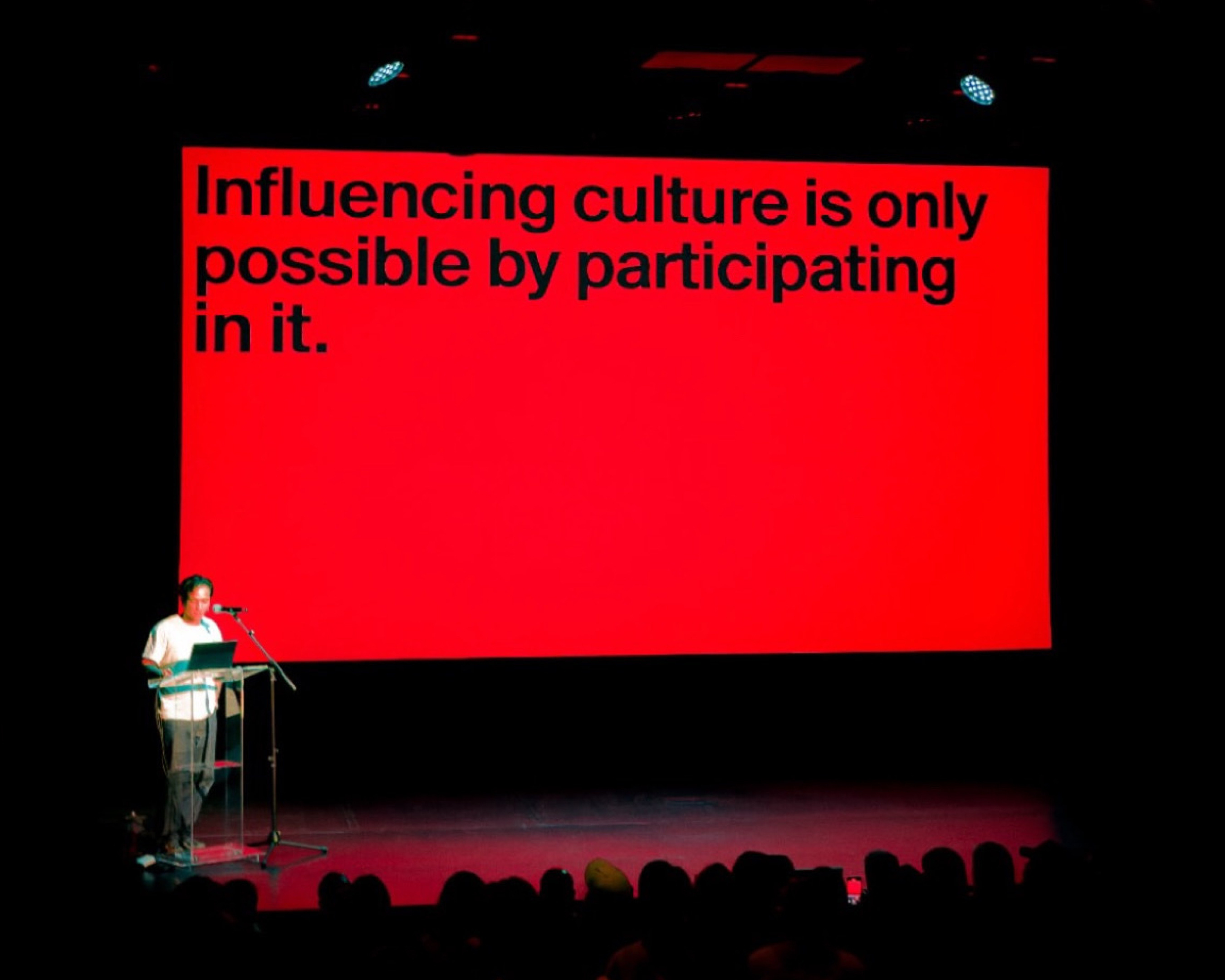
ana wasn’t wrong. she was early.
Ana Andjelic’s breakdown of influence still holds conceptually: commercial influencers, curators, bots. What changed is that those categories no longer behave separately. They collapsed into one system.
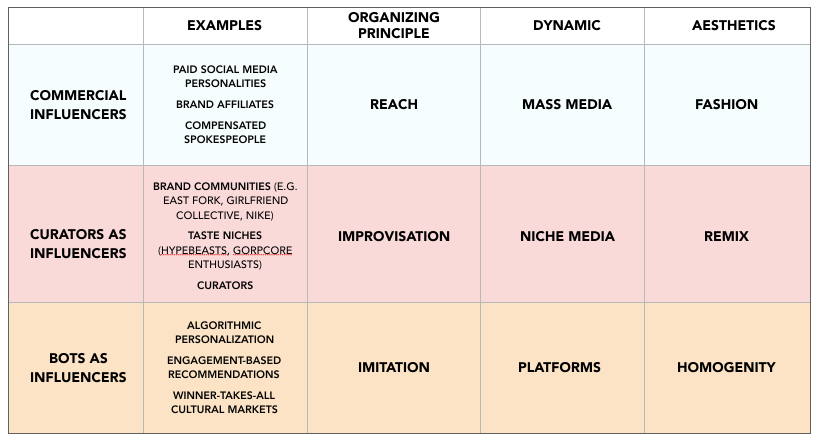
Bots don’t just imitate anymore. They scaffold credibility. Algorithms don’t just amplify. They pre-shape perception. And humans, more often than not, adapt their voice to fit the system rather than challenge it.
So influence isn’t something someone has. It’s something the environment produces.
When consistency starts to matter more than truth, when something feels legitimate because it follows the right format, the influencer becomes incidental. Replaceable. Optional.
If a machine can do the job, the job wasn’t authority to begin with.
this is really a trust problem
We talk about attention like it’s scarce. It isn’t. What’s scarce now is trust that survives contact. You have people’s attention, not their retention.
Institutional trust is fragmented. Platform trust is conditional. Media trust is siloed. In that landscape, broad influence stops making sense. There is no shared audience left to influence. So people adjust. Quietly.
They stop looking for voices that feel relatable and start looking for ones that feel grounded. Less personality, more consistency. Less performance, more depth that’s been earned.
That’s not influence. That’s authority.
And authority doesn’t scale fast enough to be exciting.
watching isn’t participation, and people are tired of pretending it is
Influencer culture trained everyone to observe. To compare. To consume other people’s lives as reference points.
But participation research points to something else taking shape underneath. People don’t just want to react anymore, they want to matter inside something. Not visibility, but implication. Not aesthetics, but practices. Not proximity, but membership.
Studies on participatory culture and “mattering” show the same pattern across contexts: spectatorship exhausts people. It produces comparison without contribution, familiarity without responsibility. Over time, it makes audiences feel interchangeable. Present, but unnecessary.
That’s why simply aligning with something on the surface doesn’t hold anymore. Watching, reposting, or buying into it isn’t the same as being part of it. Without shared rules, responsibilities, or expectations, there’s no real sense of belonging, just proximity.
Over time, that kind of participation stops feeling meaningful. Nothing is required, nothing is risked, nothing changes.
You don’t influence a culture you won’t stay in long enough to be changed by.
curation quietly replaced production
In an environment where content is infinite, making more of it proves nothing.
Selection does.
Curation used to be about taste. Now it’s about judgment. About slowing things down. About deciding what doesn’t deserve amplification. That’s not glamorous work. It doesn’t perform well. It also can’t be automated easily.
Which is exactly why it matters.
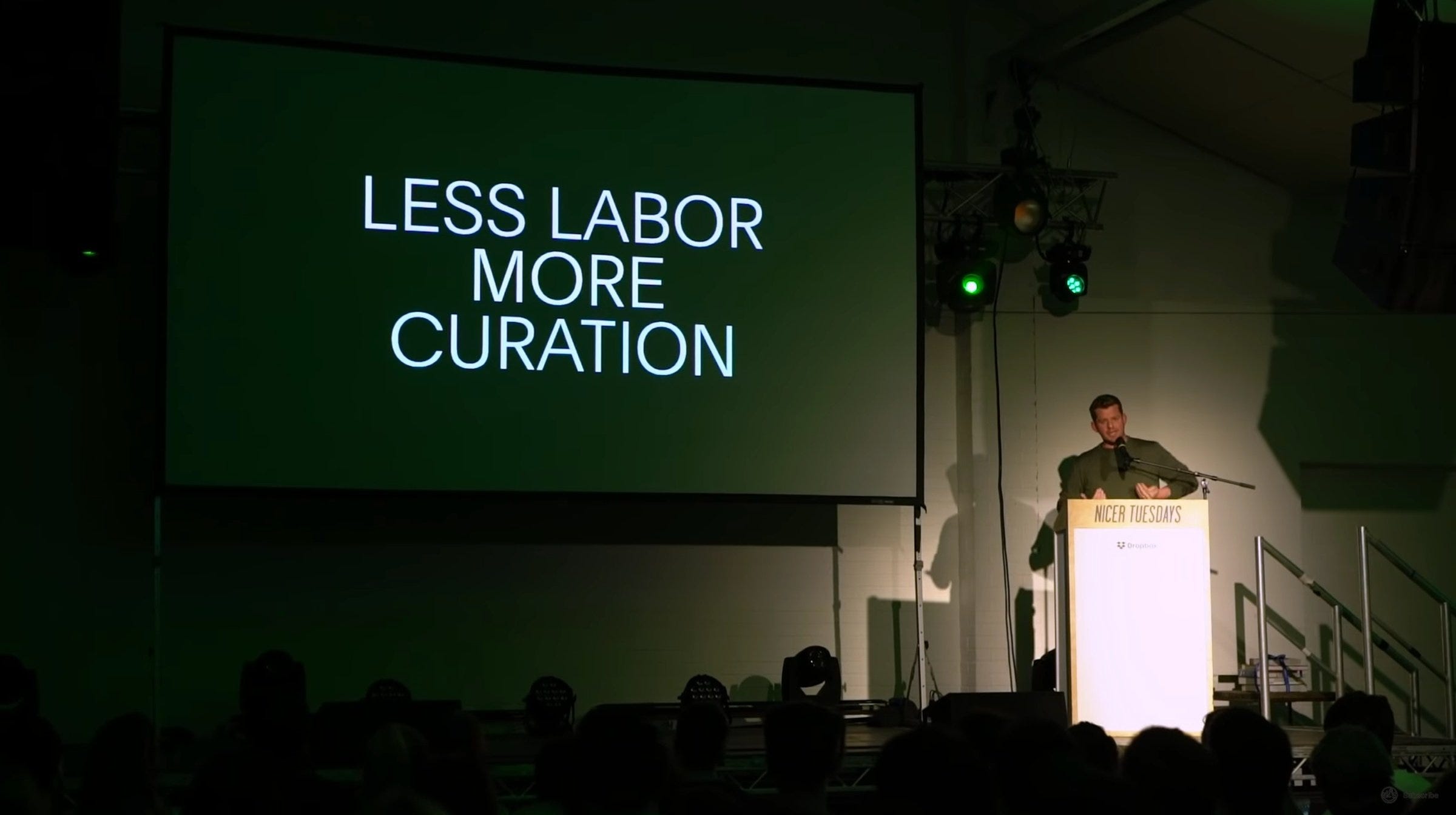
“Less labor, more curation” works because it acknowledges something most influencer strategies avoid: not everything needs to circulate, and not everyone needs to weigh in. Influence grows by expanding outward. Authority is built by knowing where to stop.
the quiet part
The decline of influencers isn’t a story about audiences becoming more discerning. It’s simpler than that. The system moved on. Platforms no longer need human intermediaries to manufacture attention, credibility, or scale. Visibility, once leverage, is now just exposure to the same mechanics flattening everything else.
What still holds weight isn’t reach, or lifestyles, or even originality. It’s whether someone is meaningfully involved in something real : whether they curate with intention, take responsibility for what they amplify, and are willing to stand behind a position when it stops performing.
For brands, this changes the work.
Stop chasing distribution and start building stakes. Stop outsourcing credibility and start earning it over time. Invest less in people who can speak everywhere, and more in structures, practices, and points of view that can hold even when attention moves on.
This kind of authority is slower to build. Harder to explain. Often invisible at first.
But it’s the only form of influence that still compounds — because it isn’t interchangeable, and it doesn’t disappear the moment the system finds a cheaper substitute.
That’s the trade. And at this point, it’s the only one that makes sense.